The short answer
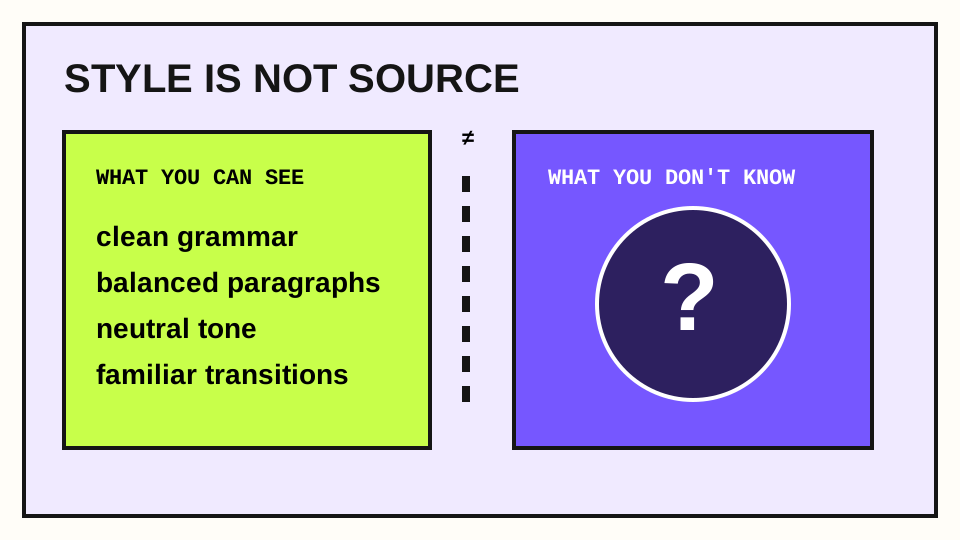
“Sounds like AI” describes an impression, not a source. Polished grammar, tidy transitions, neutral tone, and balanced paragraphs can come from a model, a template, an editor, a school assignment, a support script, or a careful person writing in a second language.
Style is evidence about a passage. It is not proof about the person—or system—behind it.
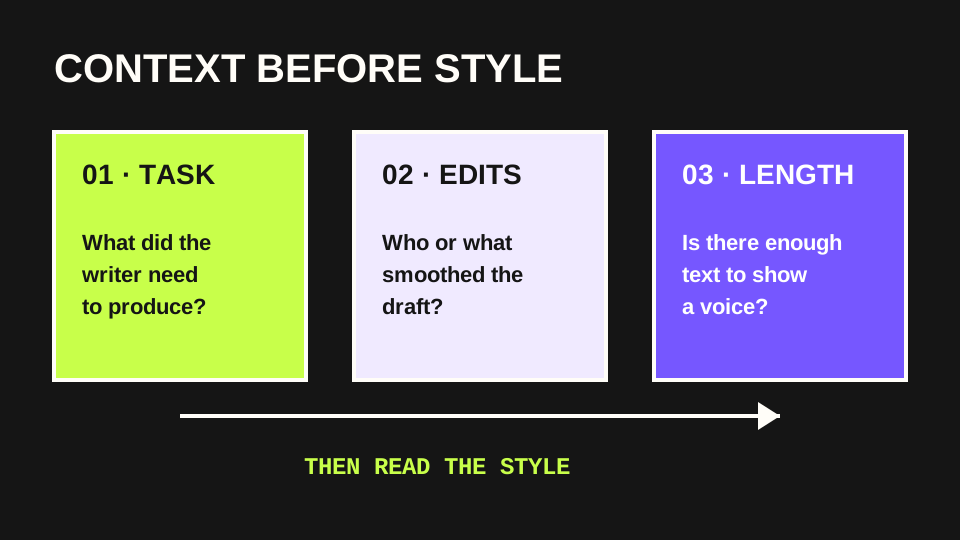
This is especially important with short samples. A brief comment may reveal the constraints of the task more clearly than the habits of its writer. Before you label it, ask what the writer was trying to do, how much room they had, and whether anyone edited the result.
Six clues that often mislead readers
- The prose is very clean. Clean grammar can reflect editing, professional habits, accessibility needs, or a narrow format. It does not identify the author.
- Every paragraph is balanced. A template or writing rubric can produce symmetry before any model enters the workflow.
- The tone is neutral. Help desks, policies, summaries, and technical documentation often suppress personality on purpose.
- The wording is predictable. Predictable tasks invite predictable answers. A weather update and a refund reply have fewer sensible phrasings than a personal story.
- There are no typos. Spellcheck, copy editing, and slow composition remove errors without changing who supplied the ideas.
- The passage uses familiar transitions. Words such as “however” or “in summary” are weak clues by themselves because people learn and reuse them too.
A fairer way to read a suspicious passage
- Name the task. Is this a review, a school response, a customer-service reply, or free writing?
- Ask what was edited. Grammar tools and human editors can both smooth a personal draft.
- Look for specific choices. Concrete memories, unusual priorities, and corrections are more informative than generic fluency.
- Compare like with like. Judge texts from the same era, topic, length, and social setting.
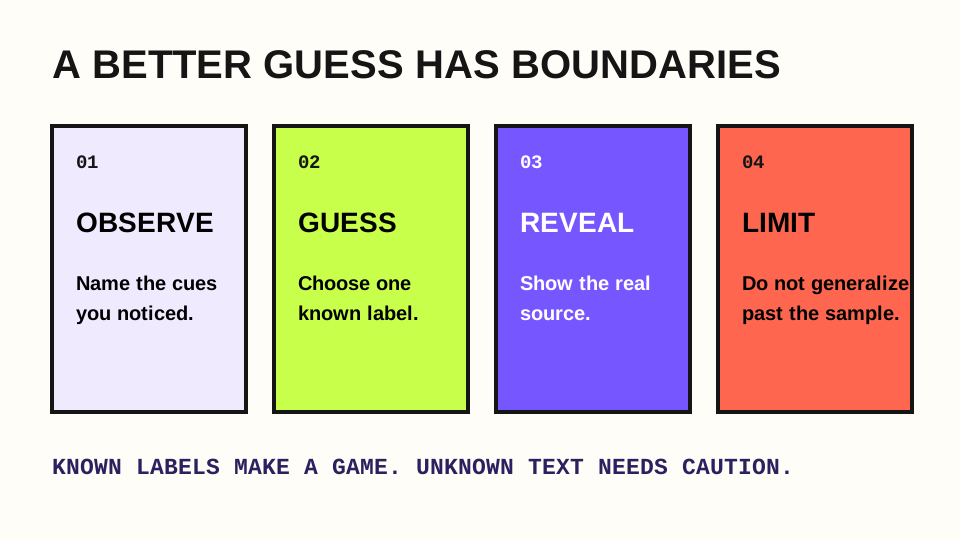
- Keep the conclusion narrow. Say which cues affected your guess; do not turn a guess into an accusation.
Can human writing sound AI?
Yes. A human passage can share the same surface features as generated prose, especially after polishing or when the writer is working inside a rigid format. Research has also shown that detector behavior changes across writer groups and datasets. That is why our Human or AI game uses passages with known labels and explains the source after each guess.
The reverse is also true: generated text can include slang, fragments, typos, and personal-sounding details. No single word, punctuation habit, or sentence rhythm settles authorship.
What the evidence changes
In 2023, OpenAI withdrew its own AI text classifier because of its low accuracy and warned that short, predictable, edited, or out-of-distribution text could be mislabeled. A 2023 study led by Stanford researchers found that several detectors disproportionately labeled non-native English writing as AI-generated. A 2025 ACL paper found that even light AI polishing made detector labels unstable.
These findings do not mean every detector is useless. They mean the decision must match the evidence. A style clue can support a careful question; it should not carry a high-stakes verdict by itself.
- OpenAI: New AI classifier for indicating AI-written text (updated July 20, 2023)
- Liang et al.: GPT detectors are biased against non-native English writers (2023)
- Saha and Feizi: The Challenge of Detecting AI-Polished Writing (ACL Findings, 2025)