The follow-up matters more than the opener
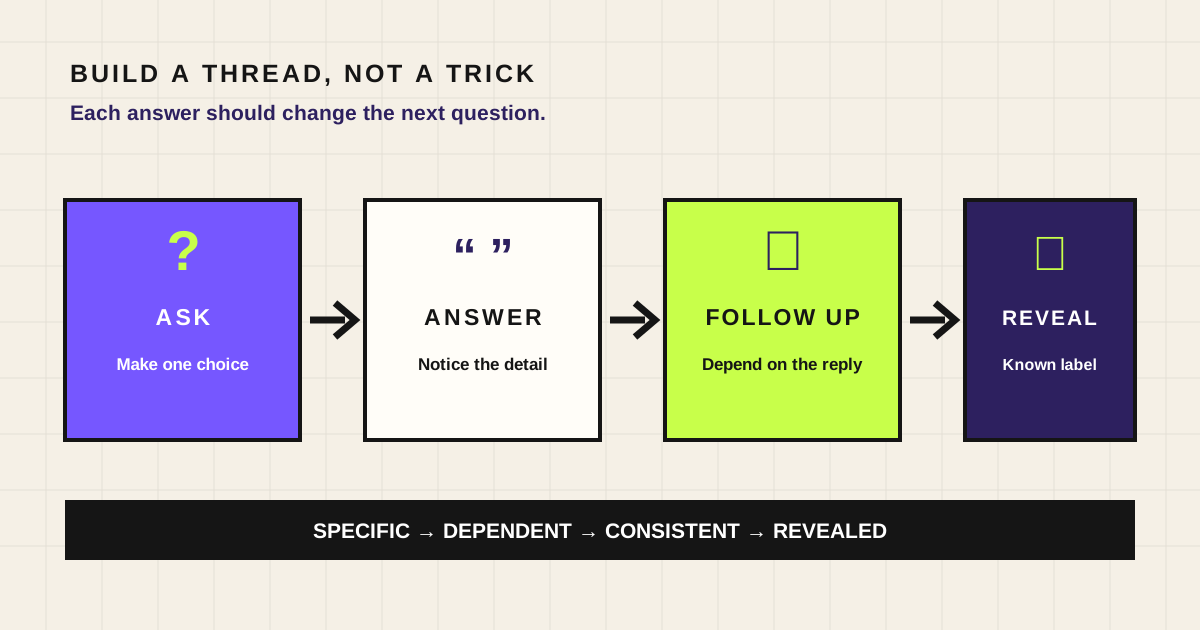
A standalone question invites a standalone performance. A ladder makes the next question depend on the previous answer. That creates a small thread you can inspect for specificity, revision, and continuity.
Turing Test Live uses an active interrogator who questions two hidden witnesses before identities are revealed. The Human or Not research project likewise studied a live social game in which people chatted before deciding whether the other side was human or AI. The useful structural idea is simple: interaction creates evidence that a frozen paragraph cannot provide.
Do not hunt for one magic question. Build a short chain in which each answer changes what you ask next.
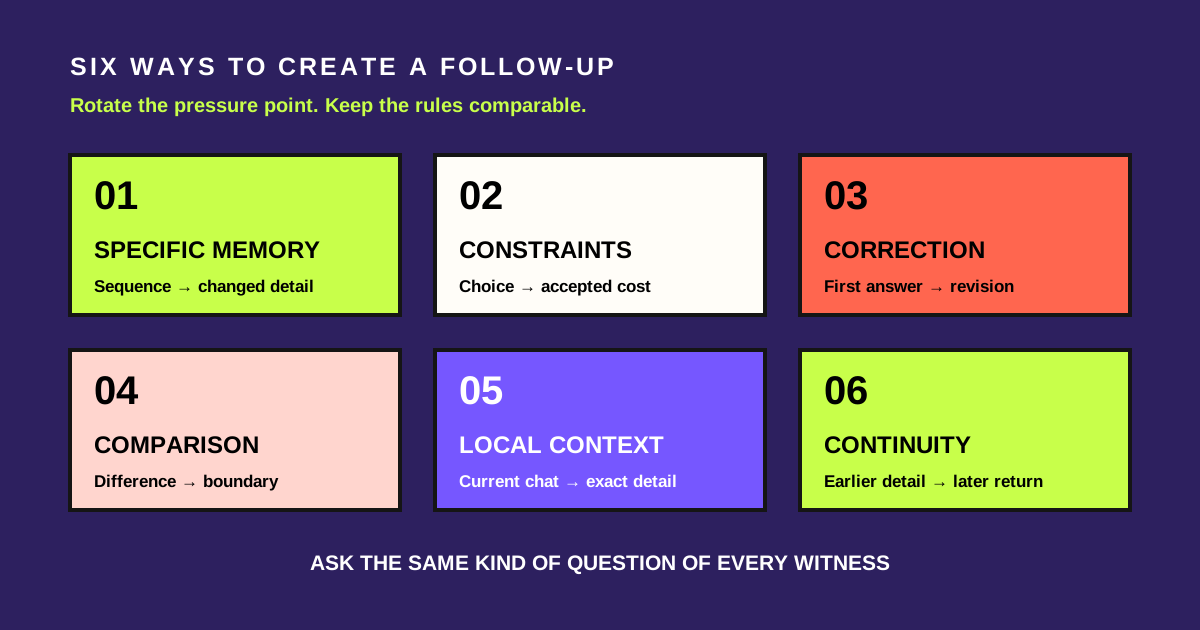
Six useful question families
- Specific memory. Ask for a small sequence, then request the detail that changed the outcome.
- Constraints. Force a choice between two imperfect options, then ask which limitation mattered most.
- Correction. Invite the witness to revise an earlier answer and explain what the first version missed.
- Comparison. Ask for a concrete difference between two familiar things, then test the boundary.
- Local context. Ask about something visible or established inside the current game rather than general knowledge.
- Continuity. Introduce one detail, change topics, and return to that detail later.
Questions that add little information
Trivia, arithmetic, riddles, typos, response speed, and direct identity questions can all be imitated, looked up, delayed, or deliberately performed. Generic questions also invite generic answers. Use them for fun, not as proof.
A community discussion about Turing-style games repeatedly suggested returning to earlier details and asking follow-ups. That is useful as a source of player behavior, not scientific validation. The Question Lab turns that player instinct into a transparent three-step structure.
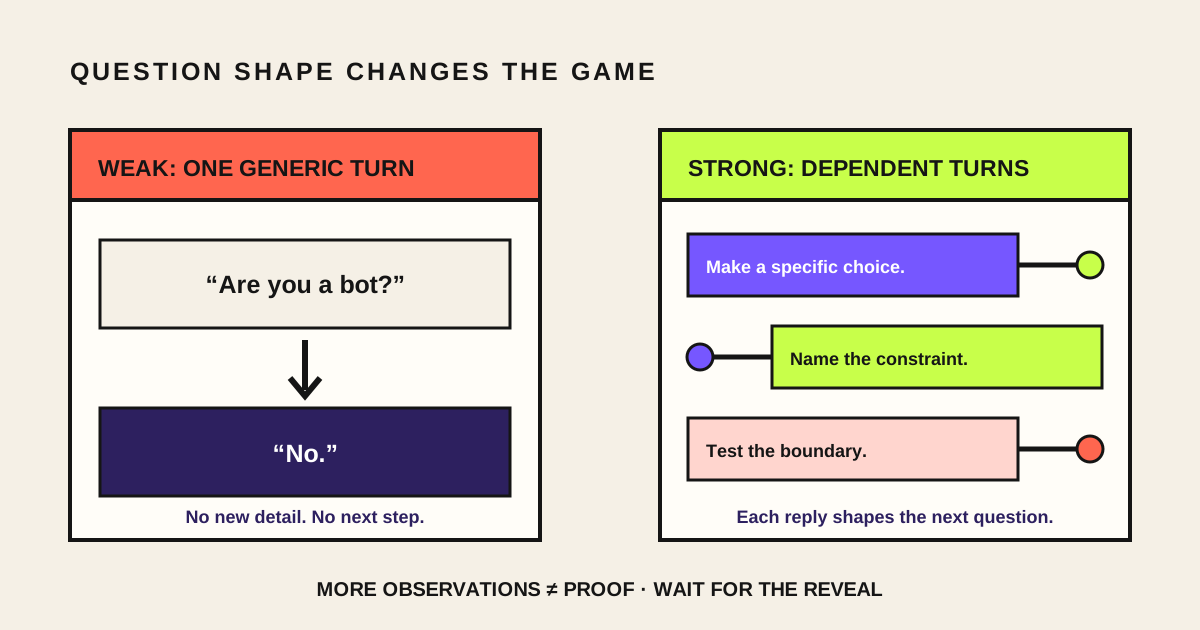
How to use the ladder fairly
- Ask the same kind of question of every witness.
- Keep the time and message limits comparable.
- Judge the whole exchange instead of one spelling habit.
- Write down what changed your mind before the reveal.
- Keep the conclusion inside the game.
Sources and provenance
- Turing Test Live (reviewed October 13, 2026: an interrogator questions two hidden witnesses before the reveal)
- Jannai et al.: Human or Not? A Gamified Approach to the Turing Test (2023)
- Reddit discussion: conducting a Turing-style test (community evidence for consistency follow-ups, not a controlled study)
All 18 ladders in the tool above were written for this page on October 13, 2026. They are prompts for a game, not excerpts from the sources.
This page is not a detector
No question proves that a witness is human or AI. The tool does not contact a model, analyze a reply, upload text, or assign an identity.