A single reply has too many explanations
A polished sentence might come from a model, an editor, a careful writer, or a person using a second language. A typo-filled answer might come from a hurried person or a system instructed to sound casual. The same surface clue can point in several directions.
Human or Not says short conversations, limited context, and typing habits can make real people sound artificial. Its game waits until after the conversation for the guess. That structure treats one reply as part of a sequence instead of a verdict.
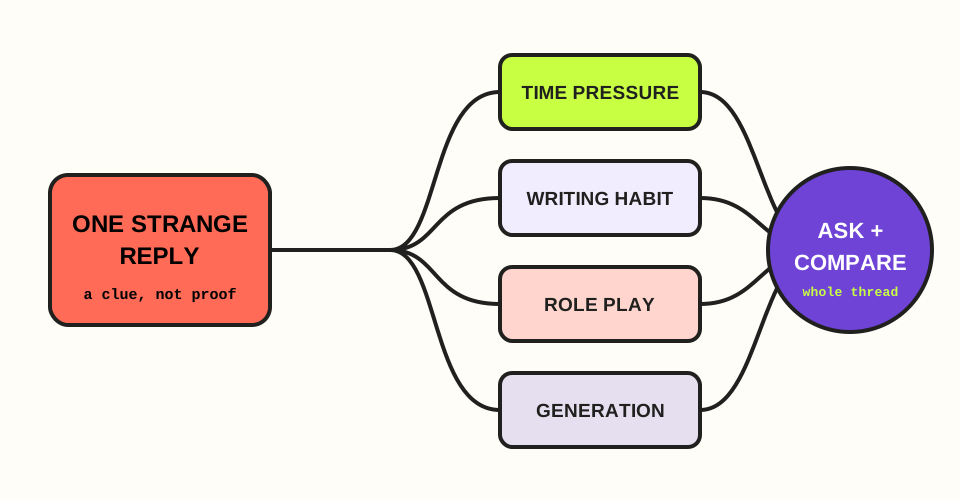
What one strange answer can do
- Give you a follow-up. Ask about the exact detail that felt unusual.
- Set a checkpoint. Remember the claim and return to it after another topic.
- Change your confidence a little. A clue can update a guess without ending the game.
- Expose the prompt. Sometimes a vague question, not the witness, created the generic answer.
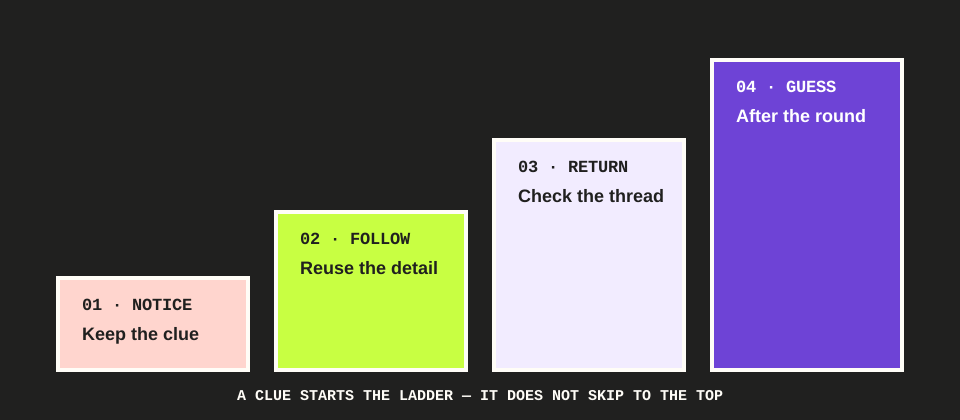
A safer rule for the game
- Notice the odd detail without assigning an identity.
- Ask a linked question that reuses the detail.
- Return to it later and compare the reasoning.
- Make one guess only after the round ends.
This rule does not promise a correct guess. It gives both witnesses the same chance to explain, correct, or develop an answer.
Why detector-style certainty does not fit this page
OpenAI withdrew its experimental AI text classifier because of its low rate of accuracy and wrote that short text was especially unreliable. Research has also found that detector results can change under paraphrasing and can disadvantage non-native English writers.
Those findings concern automated detectors, while this page is a game about human judgment. The practical lesson is narrower: do not turn one surface feature into proof.
Sources and provenance
- Human or Not (reviewed October 14, 2026: two-minute conversation followed by a Human or AI decision; FAQ discusses short context and typing habits)
- Turing Test Live (reviewed October 14, 2026: an interrogator questions hidden witnesses before the reveal)
- OpenAI: New AI classifier for indicating AI-written text (published January 31, 2023; withdrawal notice dated July 20, 2023)
- Sadasivan et al.: Can AI-Generated Text be Reliably Detected? (TMLR; arXiv version revised January 17, 2025)
- Liang et al.: GPT detectors are biased against non-native English writers (2023)
All 10 scenarios and their explanations were written for this page on October 14, 2026. They are fictional game situations, not examples taken from the sources.
This page is not a detector
It does not analyze text, identify authorship, upload anything, or contact a model. It teaches a game habit: turn a clue into another question before you turn it into a label.